Fred Cuny, humanitarian pioneer
Over his 26-year career, Cuny worked in crises in more than fifty countries, including Biafra, Guatemala, Bangladesh, Cambodia, India, Iraq, Kuwait, Somalia, Bosnia, and Chechnya. His larger than life personality, uncanny ability to “make things happen,” and his innovative ideas drove him to the forefront of the disaster response field.
In 1952 Cuny moved with his family to Texas. He had a passion for flying and hoped to become a fighter pilot, obtaining a pilot license while still in high school. He enrolled in the military cadet program at Texas A&M University, but left before graduating and transferred to Texas College of Arts and Industries in Kingsville where he became increasingly involved in causes such as the problems of local Mexican migrant workers. He later attended the University of Houston where he studied urban planning and received a bachelor's degree in political science in 1967.
Cuny started his career working at the Texas-Mexico border on a project project funded under President Johnson's War on Poverty and then went on to work with an engineering firm on the construction of the Dallas Fort Worth airport. However, at some point he became dissatisfied and decided to become a disaster relief specialist who used his urban planning background to do humanitarian work. Cuny was hired by organizations such as the United Nations and private foundations to design and carry out relief plans. Cuny was able to maintain his autonomy to devise solutions his way and became increasingly active as a policy adviser. Cuny’s overriding goal was to institute a radical restructuring of the way the disaster relief system operated throughout the world.
In 1971 he founded Intertect out of Dallas, Texas, a relief mission technical assistance and training company. Later, Interact formed a non-profit too that became the Center for the Study of Societies in Crisis which became known as the Cuny Center after his death. He worked in countries such as Biafra, Guatemala, Ethiopia, Iraq, Somalia, and Bosnia.
Cuny played a major role in providing relief to Kurds displaced by the First Gulf War. He was part of a USAID Disaster Assistance Response Team (DART) that was sent to Northern Iraq to help Kurds who had fled into the mountains. At the time, the United States and allies were airdropping food and supplies to the Kurds. However, Cuny and the rest of the DART team quickly realized that in order to actually end the crisis, the Kurds had to come down from the mountains. They advocated for a creation of a security zone that would include the locations of the Kurdish villages. The Iraqi army – who was currently in that area – would be forced to leave, and American troops would take their place to ensure the safety of residents. Then, “transit camps” – offering much better services than those on the top of the mountain – would be created, to encourage the Kurds to come down and eventually return home.
Although the senior American military officers in Kurdistan were receptive to the idea, there was reluctance farther up the chain of command, including concerns about mission creep. Undeterred, Cuny took the plan to the U.S. Ambassador to Turkey, Morton Abramowitz and quickly won him over. Abramowitz contacted the White House and the State Department, and Cuny’s idea was swiftly implemented through close collaboration with military commanders on the ground.
At the end of his life he was working closely with George Soros’ Open Society Institute, and was instrumental in the early stages of founding the International Crisis Group, which seeks to institutionalize the knowledge base of relief experts. Cuny was named a MacArthur Fellow in 1995, but disappeared before he could officially receive his award.
In April 1995, Cuny and his team of two Russian Red Cross doctors and an interpreter disappeared in Chechnya while seeking to negotiate a ceasefire. Cuny’s family believes that although the Chechen forces under Dzhokhar Dudayev were meant to let the team pass by safely, they were arrested and executed under the orders of Rizvan Elbiev (Elbiyev), a local Chechen rebel counterintelligence commander. It is suspected that the Russians, antagonised by Cuny’s published criticism of the war, disseminated propaganda that Cuny and his team were Russian spies. Their remains were never found.

On November 14, Frederick Charles Cuny is born in New Haven, Connecticut, oldest of four.
The family moves to Lake Charles, Louisiana, and later to Dallas, Texas when Cuny is eight, where he grows up during the early stages of the VietNam War. He dreams of becoming a Marine combat pilot and obtains a pilot license while still in high school.
Fred graduates from Brian Adams High School in east Dallas, already with his pilot's license and two years of high school ROTC. He enrolls in the military cadet program at Texas A&M University though leaves shorty after, and later transfers to Texas College of Arts and Industries (Texas A&I) in Kingsville.
Between his Freshman and Sophomore year, when he is not attending a Marine camp in Quantico, Virginia, Fred works on a cargo freighter in Central and South America. This is his first taste of the Third World and the first time Fred sees that everyone does not live in comfortable suburbs such as the one where he grew up.
Fred attends Texas A&I University in Kingsville, Texas where he meets his wife, Beth, and undergoes a political metamorphosis. While at Kingsville, he becomes interested in humanitarian work after visiting low-income neighborhoods in Mexico and witnessing the plight of immigrant farm workers living in South Texas. By the time he leaves A&I he is heavily involved in civil rights issues for Chicano students as well as free speech issues on campus.
Fred marries Beth in a small ceremony in Kingsville. Brandan Craig Cuny, his only child, is born the same year. The family then moves to Houston and Fred enrolls at the University of Houston.
Fred receives a bachelor's degree in political science from the University of Houston, where he studies Urban Planning. He also runs as a liberal Democrat in a special election to fill a vacant seat in the Texas House of Representatives. The suburban Houston district is very conservative, and Fred places 13th out of 16 candidates with slightly more than one percent of the vote.
After graduation, Fred works in the small town of Eagle Pass, Texas on the Mexican border in a project funded under President Johnson's War on Poverty. As the "coordinator of community resources," it was Cuny's first hands-on chance at organizing and motivating people to take matters into their own hands. There he developed solutions to long-standing infrastructure and public health problems.
After Eagle Pass, Fred works with the Carter and Burgess Engineering firm in Fort Worth, Texas, where he is assigned to the massive construction project of the Dallas-Fort Worth airport. That same year, Fred takes a leave of absence from a job with Carter & Burgess, to go to Biafra where he experienced his first international humanitarian crisis, when the region attempts to secede from Nigeria.
After Biafra, Cuny establishes Intertect, a small private company dedicated to providing technical assistance, mainly to voluntary agencies, NGOs, the US Government, and United Nations organizations. The same year, Cuny is hired by Oxfam to serve as an advisor in East Pakistan (now Bangaldesh) following a cylone that killed some 300,000 people and displaced 10 million East Pakistanis. He later described this assignment as life changing because it was there that he was first fully immersed in the vast, often dysfunctional machinery of the international disaster relief system.
Because of Cuny's work in East Pakistan for Oxfam, the NGO called upon him again after the 1972 earthquake in Nicaragua to plan a camp for the survivors. During this job, Fred implmented for the first time his model of setting up shelter units in a cluster around a common space to encourage community interaction, mutual support and security, as opposed to the military model of tents in a grid of straight rows.
Following an extremely destructive earthquake in Guatemala, which destroyed ~258,000 houses and left 1.2 million people homeless, Oxfam again asks Cuny to conceptualize a strategy for housing reconstruction. His response is a novel approach called "Programa Kuchuba'l." In it, Cuny incorporates a high degree of citizen participation at all levels and includes an educational component for both the general public and local builders, with the goal of 'building back better.'
Cuny is contracted to advise on the Kampuchean refugee camp design and management in Thailand. He is again able to implement the 'community unit layout' of camps he first used in Nicaragua. This time he also integrates a latrine and water access point into the design concept which prove fundamental to achieving public health and social goals.
Cuny responds to the Ethiopian refugee crisis in Somalia.
Cuny and Intertect colleagues undertake projects in over a dozen countries to identify housing vulnerable to disasters, develop recommendations on how to safely retrofit the vulnerable housing, and build programs to train local builders to implement these improved construction techniques. During this time, Cuny also spearheads three international conferences on how to build earthen and un-reinforced masonry housing safely in earthquake prone regions.
Cuny begins working with the U.S. Bureau of Refugee Programs in Lebanon advising on how to provide assistance to Palestinian refugees. He also becomes the co-founder of the University of Wisconsin Disaster Management Center and makes major contributions to the development of the curriculum and content of several courses.
Fred is involved in responding to the displaced peoples from the civil war in Sri Lanka. He continues to respond to requests for advice on assistance in Sri Lanka into the 1990s. Cuny's book "Disasters and Development", is published by Oxford University Press, it goes on to inspire a generation of aid workers to think more methodically about what is needed in different types of natural disasters.
With the famine crisis in sub-Saharan Africa, Fred is called to the Sudan to oversee the running of the burgeoning refugee camps, caused by a massive immigration from Ethiopia. During this time, Cuny conducted assessments of famine victims who had fled to Sudan from areas of Ethiopia that were affected by protracted drought, war and famine.
While in Sudan, Fred is constantly at odds with UNHCR officials. He feels they are too cautious, unprepared and unwilling to act when the situation was worsening by the day. Fred becomes a strong advocate for helping refugees voluntarily return to their homes, in spite of the ongoing war in Ethiopia, and eventually arranges to provide food to those who voluntarily repatriate in spite of opposition from the US government and UN representatives.
During this time, the UNHCR Emergency Unit engages Cuny to make substantial contributions to its pioneering Emergency Management Training Program.
Following an earthquake in El Salvador that left over 200,000 people homeless the United States Agency for International Development/ Office of Foreign Disaster Assistance (USAID/OFDA) hires Cuny to help. He devises a unique 'big-picture' approach to recovery, that is centered on the El Salvador government purchasing under-utilized land and building multi-family housing for disaster survivors who had been renters and squatters, a population usually overlooked by external aid organizations. The same year, Cuny also leads an inter-agency assessment of food needs inside Ethiopia adding in new measurements to examine dependency problems and longer-term approaches to help identify different strategies for livelihoods support.
Cuny is involved in an ongoing innovative venture in which large quantities of cash are taken across the border from North Sudan into Ethiopia to improve the purchasing power of the famine victims in Tigray and Eritrea.
OFDA calls on Cuny and Intertect to lead assessment missions to several parts of the former Soviet Union (i.e., Georgia, North Ossetia, Ingushetia, Dagestan and Chechnya) and they are instrumental in developing the policies and approaches that the US Government later employed in assisting the states affected by the breakup. This experience in Russia is Cuny's introduction to the region and it contributes to his interest and subsequent involvement in the region.
As part of a U.S. government team planning post–Gulf War reconstruction in Kuwait, Cuny warns of the imminent danger facing roughly 500,000 Palestinian workers targeted for potential retribution. He then develops a strategy to protect them. At the same time, Cuny also advised the U.S. State Department and military on managing refugee flows from southern Iraq and the crisis involving hundreds of thousands of Kurds stranded along the mountainous Iraq–Turkey border. Cuny proposed establishing safe zones in northern Iraq and persuaded displaced Kurds to return to their home communities rather than remain in unsustainable mountain camps. The U.S. government adopted this approach as Operation Provide Comfort, which successfully resolved the crisis.
In response to a developing famine, Cuny travels to Somalia to assist the U.S. government in establishing food supply programs and advocates for the limited use of military assets in humanitarian aid delivery, though his recommendations are largely excluded from final planning and the intervention ultimately proves unsuccessful. During this period, Cuny and Intertect also advise on assistance for populations displaced by the eruption of Mount Pinatubo, support humanitarian programming during the Sri Lankan civil war, contribute to cyclone recovery efforts in the Maldives, and advise UNDP and the government of Bangladesh on cyclone protection and management in the Meghna Delta.
Cuny serves as senior advisor to the U.S. government's response to humanitarian needs in the newly independent states following the breakup of the Soviet Union, leading assessment missions across Russia, Mongolia, Georgia, North Ossetia, Ingushetia, Dagestan, and Chechnya, and helping shape U.S. assistance policy for the region.
Cuny and Intertect collaborate with philanthropist George Soros to support besieged Sarajevo during the Bosnian war. Intertect maintains continuous teams in the city, designing and implementing food, water, and heating programs, including a modular water purification system that was strategically flown-in in pieces by C-130 aircraft and installed under siege conditions. Intertect teams also assist with humanitarian operations elsewhere in Bosnia and Croatia, including innovations in airlifted relief delivery to Sarajevo.
Cuny and Morton Abramowitz, then president of the Carnegie Endowment for International Peace, help conceptualize the International Crisis Group (ICG), an organization dedicated to preventing deadly conflict and mobilizing the political will necessary to ensure a meaningful response, with Cuny slated to become its first director of foreign operations. In November, Cuny returns to northern Iraq for an assessment mission and is seriously injured in a traffic accident, sustaining damage to his leg and back.
At George Soros's request, Cuny travels to Chechnya to assess humanitarian needs following the Russian assault on Grozny. After returning briefly to the United States, he publicly denounces the Russian campaign and publishes the article "Killing Chechnya" in the New York Review of Books. On March 31, while traveling in a Russian ambulance with two doctors and an interpreter from Ingushetia into Chechnya, Cuny and his companions are captured by unidentified Chechen forces. An international search involving the Open Society Institute, U.S. and Russian authorities, and Chechen forces follows, but after months of investigation, Cuny's family announces credible reports that Cuny and his three colleagues were executed near the village of Stary Atchkoi. Their bodies are never recovered.
The Fred Cuny Professorship was established through a $2.5 million gift from Robert Donia and Jane Ritter to honor the legacy of Fred Cuny, by supporting the study of the history, institutions, and practices of international humanitarianism and human rights.
Fred Cuny was awarded a MacArthur Foundation Fellowship in 1995 in recognition of his extraordinary innovation and impact in humanitarian relief and disaster response, though he disappeared later that year before formally receiving the honor.
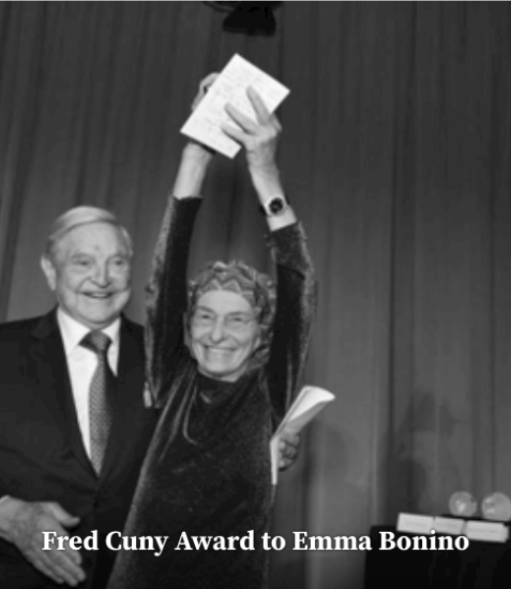
The Fred Cuny Award for the Prevention of Deadly Conflict (given by the International Crisis Group) honors individuals who demonstrate exceptional leadership and commitment to preventing violent conflict and alleviating human suffering.
Explore the comprehensive biography, references, and further reading on Fred Cuny’s official Wikipedia entry.